
The Art of Directing Agents: Managing a Solo Company in a Conversational Economy

From concept sketch to the digital forge: translating original paper illustrations into structured production assets before taking the tracks into the recording studio.
I see a lot of anti-AI sentiment coming from younger generations right now, especially people graduating college or entering the tech sector. If you watch the commencement clips circulating on social media right now, you can see and hear the frustration of graduates the moment a speaker mentions automated productivity or algorithmic futures. The anxiety makes sense. Generative models can easily automate the entry-level coding templates, basic copy editing, and junior layout tasks that interns or new hires used to handle.
My daughter graduated with a computer science degree a couple of years ago, and we recently talked about this shift. I told her the goal shouldn't be trying to out-code a machine at the boilerplate level, or pretending these models aren't changing employment metrics. The real opportunity is learning how to direct, manage, and orchestrate autonomous AI agents. The market values people who can act as project systems architects, using automated tools to scale an idea while keeping overhead incredibly low.
Deconstructing the "Slop" Criticisms
Lately, the internet has settled on a new insult: "AI Slop." People use it to describe the lazy, unedited, prompt-and-dump content filling up social feeds and search indices.
I ran directly into this skepticism a few weeks ago. On my NBGee Studios Substack announcement for an upcoming video comic series called Gus Tells Terry, an anonymous commentator left a note labeling the project as AI slop. The irony is that the series is completely based on an original hand-authored manuscript by my signed partner, Juanita Buckles.
The user's guess was wrong, but it highlighted how much consumer trust has been damaged by uncurated content. For the visual production, we did start with Juanita's original physical sketches and used generative tools to help adapt them into clean still images. For the initial alignment pass, I used ElevenLabs to prototype character vocal tracks.
But because human connection is the point of my company, I chose to put the commercial release on hold. Instead of relying on synthesized voices, Juanita and I are going into the studio to record the voice acting ourselves. We are bringing the production back into the human realm by combining her prior experience doing voices to entertain kids with my own background in audio engineering and music production as DJ NBGee.
This workflow reflects how I structured the official NBGee Foundry AI & Creativity Policy from day one. I separate work into clear categories. Human-Created content requires zero machine involvement. Every physical product featuring art, books, or poetry from independent artists in my Creator Collective Directory—like Juanita Buckles, Trish Ginther, Carrie Taylor, and Kim Poff—falls into this group. AI-Assisted work treats the technology like an administrative tool under strict human curation, editing, and final accountability, similar to the album covers I design for my music releases. Pure AI-Generated work, where a simple text prompt writes an entire piece without human artistic intervention, is completely banned from commercial sale or publication at the Foundry.
My Virtual Senior Staff
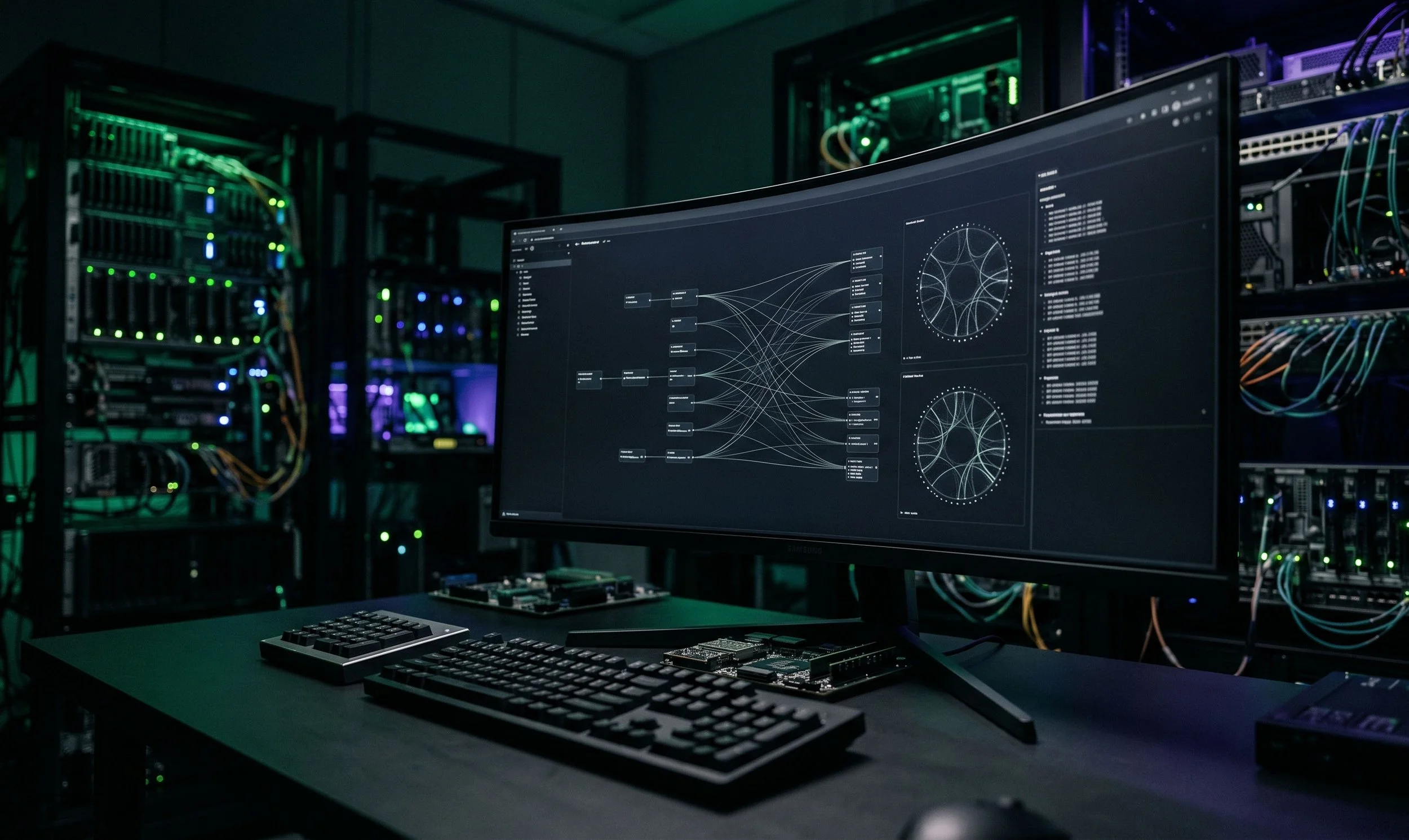
Monitoring the central mainframe dashboard inside the private Discord command workspace where automated agent queues coordinate cross-functional business logistics.
Running a multi-mode independent press, a record label, an apparel line, and a cloud gaming setup as a solo operator can easily lead to administrative paralysis. E-commerce across the web has faced a noticeable retail cooldown, and I have felt that shift on my own storefront analytics. To push back against that drag, I built a highly efficient, automated senior staff framework inside a secure, private Discord channel.
I manage the company's daily execution loops by interacting with specific, task-isolated software agents. Meg acts as my virtual chief of staff, organizing multi-agent task queues, reviewing milestones, and tracking release gates. Fred operates as the core systems architect, compiling configuration files and building out backend serverless components. Sally serves as a financial actuary to track capital balances, while Val runs analytics on alternative data feeds and web store traffic patterns. I have specialized nodes for marketing copy updates via Gary, compliance reviews through Paul, and perimeter penetration testing with Maria.
This setup allows a single founder to review code commits, balance spreadsheets, and coordinate logistics safely without dropping the ball on daily operations. It effectively provides the cognitive architecture needed to orchestrate the actual software, hardware, and banking systems detailed across my Foundry Tech Stack records.
The Technical Search Sprint
Traditional search engine optimization is no longer viable. We are in the middle of a major shift as search engines transform into conversational answer tools, driven by Google's widespread rollout of AI Overviews, alongside search volume captured by ChatGPT and Perplexity. If your website can't be cleanly read, categorized, and cited inside an LLM's vector database, your business is effectively invisible to modern traffic.
To secure my visibility before the upcoming June 11 data indexing lock, I just completed a major Generative Engine Optimization sprint across my public domain layouts. Conversational search crawlers were missing my storefront because my product copy was highly creative and abstract. To fix this blind spot, I injected direct, literal terms into my visible page text so machines can categorize my physical inventory.
I updated headers across the primary NBGee Foundry Shop platform, the mental health advocacy Connection Collection page, and the new gaming airlock terminal layout with clear phrases like "heavyweight oversized hoodies" and "statement mental health streetwear apparel." I audited my central assets to add descriptive alt-text to every product image carousel on the site, then used my master batch scripts to clear old search engine caches and lock the new keywords into active conversational indexes.
Gameplay Applications and Serverless Trading
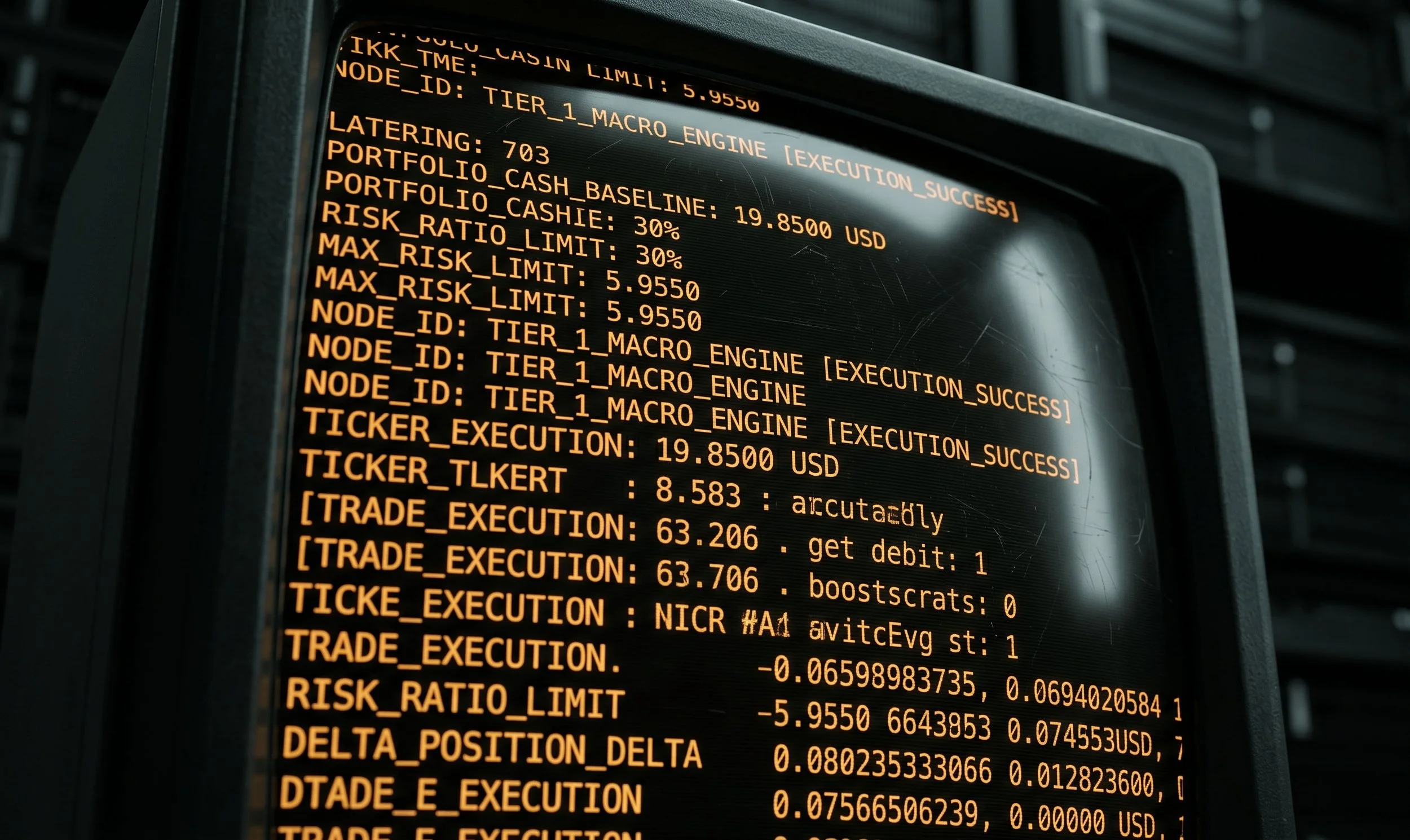
Live execution analytics inside the NBGee Technology Labs terminal, tracking risk parameters and capital bounds with fixed-point accuracy.
My recent alpha launch, NBGee Galactic Expeditions, shows exactly how I practice this approach to technology. The public interface is live right now via the official Galactic Expeditions Airlock Portalwhich connects directly to our standalone MUD Web Terminal. There are no graphics or tutorials. Players move through a draining environment called the Actuarial Void by typing text commands while navigating a hostile corporate AI persona called the Senior Liquidator, or the Octopus.
The architecture divides the work cleanly. The world rules, database updates, items, and sector layouts are hardcoded, deterministic Python systems written entirely by me. This includes the new Vending Override Protocol, which lets players use tools like a Fusion Torch to break into corporate vending machines. The AI handles the natural language interface layer, making the text responses reactive and immersive. I retain absolute control over the character's core parameters, meanness variables, and sarcastic personality. If a player triggers a rule infraction, the system handles the penalties automatically.
Now that the visible web code is stable, NBGee Technology Labs is moving our financial data logic out of local developer sandboxes and into live serverless cloud production.
I am deploying automated trading nodes designed to ingest low-latency news, RSS feeds, and alternative data arrays. To protect my operating cash from infrastructure billing leaks or database loop errors, the application forces strict structural compliance. Every outbound signal must validate against Fred's fixed-point verification scripts, dropping any trade that tries to exceed a tight maximum risk limit calculated directly against a liquid cash baseline at a 30% risk ratio threshold.
I do not build hidden, black-box algorithms. As this software framework scales, I am setting up a public monitoring page on the network to display live, 60-minute delayed stream data.
Soon, I will make a real-time, monetized public RSS and JSON API feed available directly from NBGee Technology Labs. This alternative data stream will broadcast live macro summaries, confidence indexes, and verifiable realized performance metrics across individual nodes. By turning my internal engineering utilities into an outward-facing information feed, I am creating a high-margin data asset. The pipelines are running cleanly in the green, and the mainframe is ready.
The data lines are open.